


Every Fall, the Same Thing Starts
Somewhere around October, something shifts. The days get shorter and you can feel it in a way that goes beyond noticing the dark. You start sleeping more. Canceling things. The food you’re reaching for changes. By November you’ve mostly pulled in. By February you’ve stopped trying to explain it and started just waiting for it to pass.
And then spring comes and you suddenly feel like yourself again, which is its own kind of disorienting. Because if you can feel that good in April, why did the last four months feel impossible?
That’s seasonal affective disorder. It’s a form of major depression that starts in fall, worsens through winter, and lifts in spring. For most people who have it, the same pattern repeats every year.
The good news is that because it follows the calendar, you can meet it before it gets here.


This Is Different From Just Not Liking Winter
Most people feel some version of the winter blah. Less energy, less motivation, more time on the couch. That’s common and normal, and it usually responds to a weekend with friends or a good week at the gym.
Seasonal affective disorder is different in degree and in kind. It’s a clinical depressive episode that typically begins in late fall and lifts in spring, repeating for at least two consecutive years. It doesn’t respond to pushing through. It doesn’t lift because something good happens. It follows the light, not your circumstances.
It’s also not the same as holiday stress. Holiday stress has a cause you can point to. Family dynamics. Financial pressure. The gap between expectation and reality. SAD doesn’t care about your holidays. It’s responding to how many hours of daylight Philadelphia gets in November, not to anything on your calendar.
What Seasonal Depression Actually Feels Like
Sleeping more, still exhausted. Nine hours and you wake up feeling like you haven’t slept. Mornings are brutal. Getting up requires effort that doesn’t make sense given how much you’ve slept.
Carbohydrate cravings you can’t logic your way out of. Bread, pasta, sugar. Your body wants them constantly and the usual willpower doesn’t apply. This isn’t a character issue. It’s your brain looking for serotonin through the fastest available route.
Social withdrawal that feels like self-preservation. Canceling plans doesn’t feel like laziness. It feels necessary. Other people require energy you don’t have. You tell yourself you’ll catch up with everyone in the spring.
Low mood without an obvious cause. Nothing particularly bad has happened. Life is fine on paper. But everything feels heavy and colorless and far away.
Difficulty concentrating. The mental fog that makes work slower and decisions harder. Things that were easy in September become effortful in January.
The sense that this is just how things are now. The flatness becomes background noise. You stop expecting to feel better and start just waiting for April.
The Thing About SAD That’s Actually Useful

Most depression doesn’t announce itself in advance. Seasonal depression does.
You know it comes in October or November. You know it lifts in March or April. You know what it feels like when it starts, and you know what it costs you every year. That predictability is frustrating when you’re living inside it. But it’s also an advantage, because it means you can do something before it gets bad rather than after.
Therapy for SAD works best when it starts before the season, not after you’re already three months in. October is better than December. September is better than October. If you’ve had two or more years of this pattern, the question isn’t whether it will come back. The question is whether you’re going to approach it the same way you always have.
How We Approach Seasonal Depression
There’s a version of CBT specifically designed for SAD, called CBT-SAD, that research has shown to be as effective as light therapy and more durable in preventing recurrence the following year. It works on the behavioral patterns that make seasonal depression worse. The withdrawal, the hibernation, the canceling of everything. And on the thought patterns that grow in the dark. The belief that this will last forever. The conviction that you’re falling behind. The story that the version of you who is okay only exists in warmer months.
We also talk about light therapy. We don’t prescribe it, but we’re familiar with the evidence and can help you think through whether it makes sense alongside therapy for your situation.
For some people, seasonal depression layers on top of existing depression or anxiety. When that’s the case, the seasonal episode tends to be more severe and harder to shake. We work with the full picture, not just the calendar piece.

What to Expect When You Start Seasonal Depression Therapy
If you come in before the season, in September or October, the work is proactive. We get specific about your pattern before it takes hold. What your early warning signs look like. What tends to trigger the slide for you personally, beyond just the calendar. What behavioral patterns you default to that make it worse. You’re building the tools and the plan before you need them, which changes what the season actually feels like.
If you’re already in the middle of it, the first priority is the current episode. Stabilizing the withdrawal, interrupting the patterns that are deepening it, finding small entry points back into the things that restore you. The prevention work for next year starts as soon as the current season allows.
Either way, by the time spring comes you’ll have a plan for next fall. A specific one. Your pattern, your early warning signs, your personal response playbook for when it starts again. So when October rolls around, you’re not figuring out how to handle it. You already know.
Areas We Serve
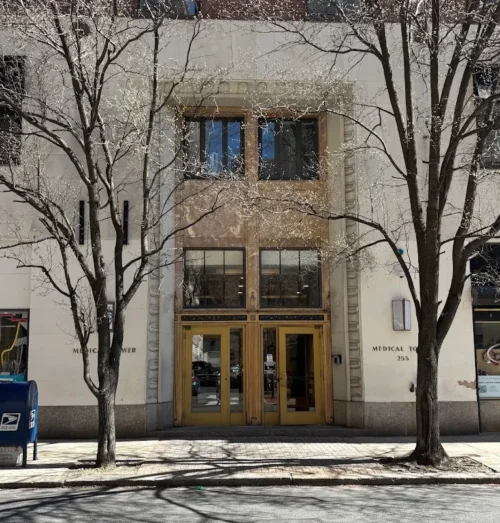
We see seasonal depression clients from across Philadelphia and the surrounding area. Center City, Rittenhouse Square, Northern Liberties, Fishtown, University City, South Philly, Graduate Hospital, Society Hill, Queen Village, and from the Main Line, Montgomery County, and Chester County.
Philadelphia winters are grey in a way that accumulates. November through February, the sun is low and scarce, and the city loses daylight before most people leave the office. If you’re already prone to seasonal depression, this city gives it a lot to work with.
Online therapy throughout Pennsylvania and New Jersey is available and particularly worth considering for SAD clients. The months when you most need to show up for therapy are the exact months when getting out of the house feels hardest. A video session from your apartment removes that obstacle. You stay warm. You keep the appointment. The work gets done.
Philadelphia Therapy Office
In the heart of Center City Philadelphia, our office offers you convenient access to expert care. With flexible appointment times to accommodate your busy schedule, we’re committed to making your therapy journey as seamless as possible. Also offering online therapy in PA and NJ.
Offering Online Counseling In
You Don’t Have to Keep Losing Winters
Seasonal depression responds well to treatment. People who start therapy before the season hits, even just a few sessions in September or October, often find that winter stops feeling like something to survive. You don’t have to keep going through the same cycle.
Clinically reviewed by Leeor Gal, LMFT